What You Receive with Every KTP Soil Investigation
- Certified Borehole Lithology Logs: Depth-by-depth visual stratum profile, soil classification (USCS), and ground elevation data.
- Standard Penetration Test (SPT) Charts: Tabulated and plotted N-values measured at 1.5-meter intervals according to ASTM D1586.
- Undisturbed & Disturbed Core Samples: Shelby tube undisturbed cohesive samples and jar-sealed representative bulk samples.
- Groundwater Level Records: Static groundwater table depth observed during drilling and 24 hours post-completion.
- Accredited Laboratory Test Battery: Sieve analysis, Atterberg limits, direct shear, unconfined compression, consolidation, and moisture density.
- Chemical Aggressiveness Analysis: Subsurface water and soil testing for sulphate, chloride, and pH to determine sulfate-resistant cement requirements.
- Engineering Foundation Report: Safe net allowable bearing capacity calculations (qall), settlement estimates, and recommendations signed by a PEC-registered geotechnical engineer.
Ensuring Structural Safety Through Geotechnical Precision
Constructing any structure without reliable geotechnical subsurface data introduces immense financial and structural risk. Varying soil formations across Pakistan, such as coastal marine clays in Karachi, loose alluvial sands along the Indus basin, and expansive silts in urban centers, exhibit vastly different load-bearing characteristics. Without rigorous soil investigation bores, structures face severe risks of differential settlement, hairline wall cracking, foundational tilting, or catastrophic structural collapse under seismic loads.
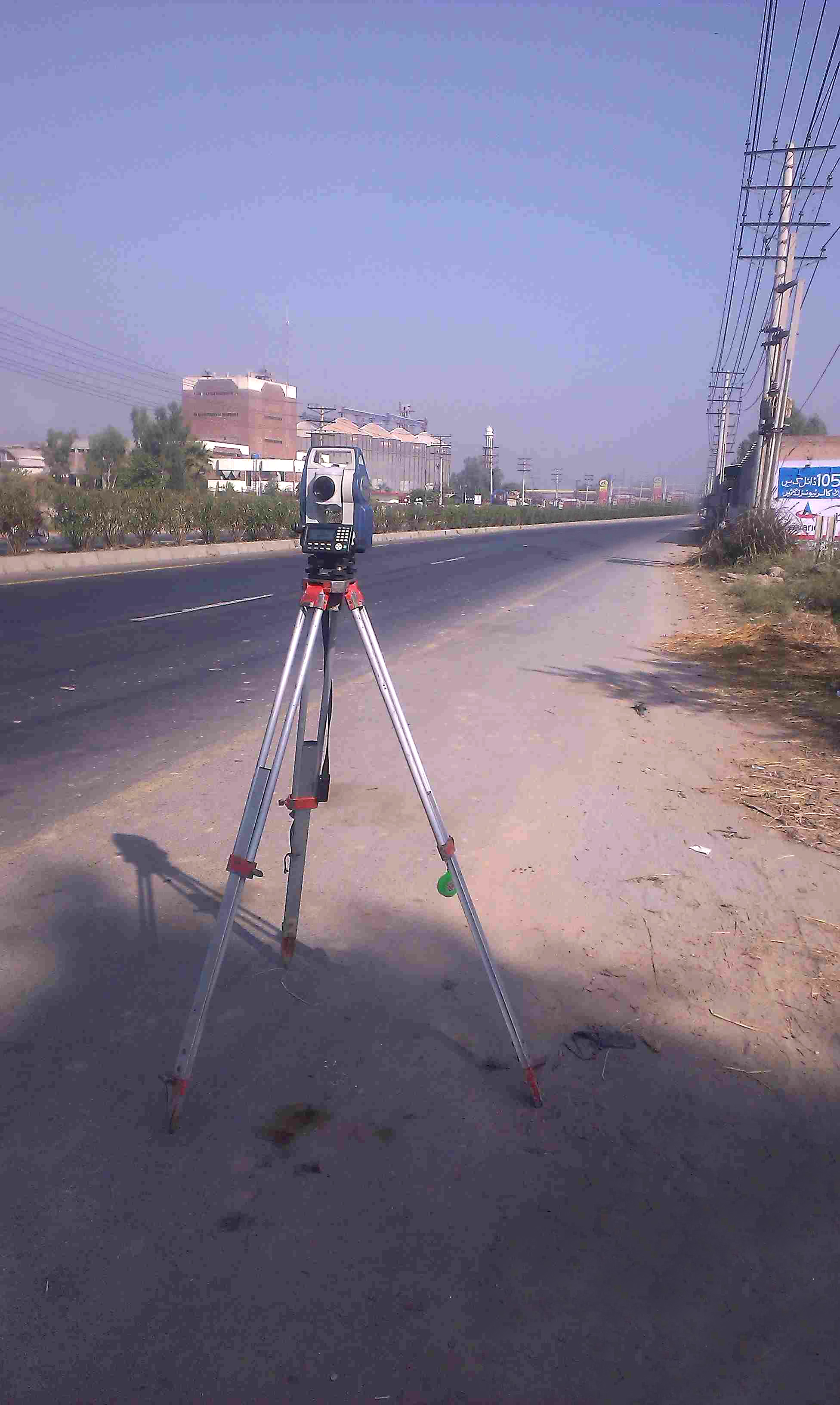
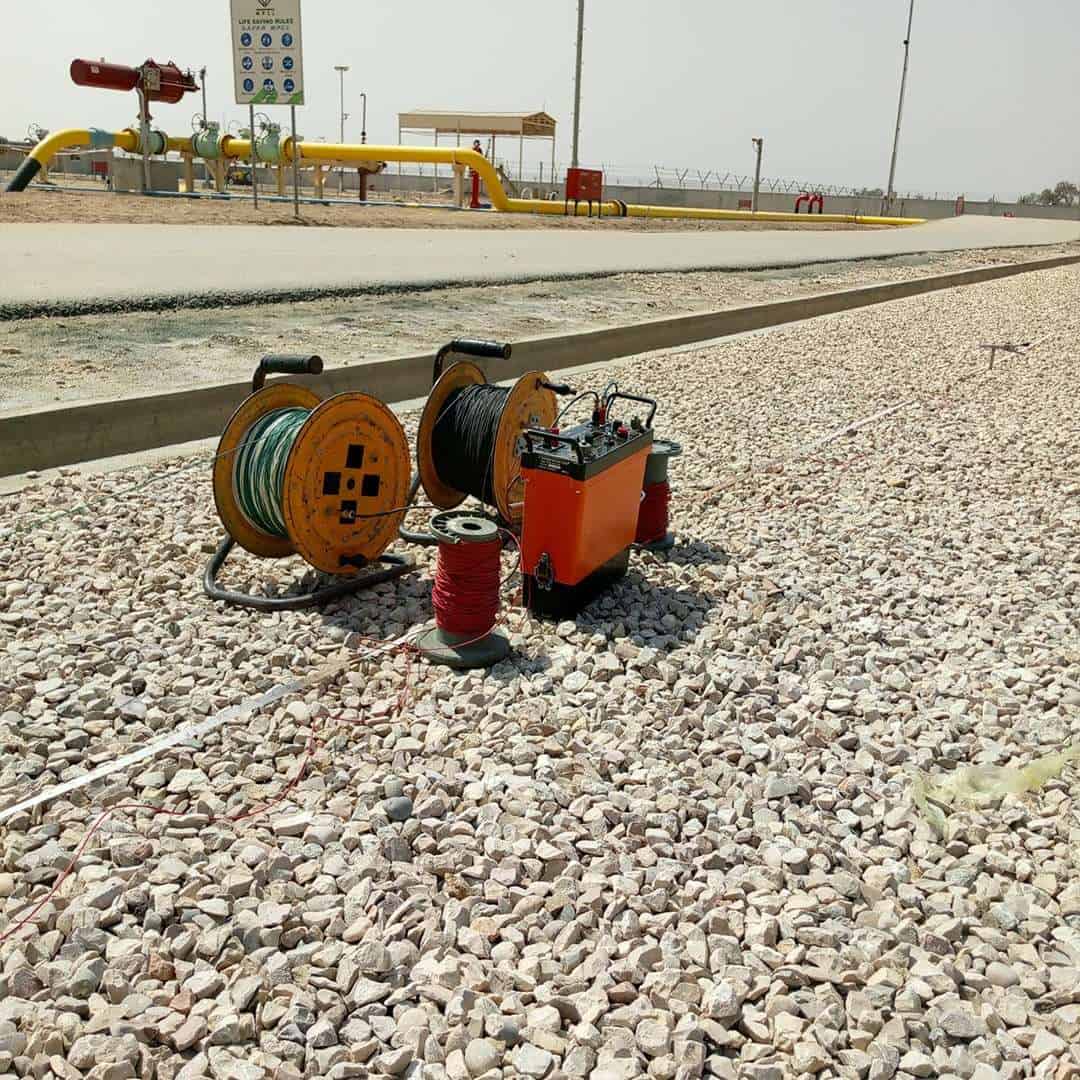
At Karachi Tubewell & Pumps, our geotechnical division pairs modern rotary drilling rigs with calibrated automatic trip hammers and precision testing equipment. We operate in accordance with international ASTM, British (BS), and Pakistan Engineering Council (PEC) standards. Whether you are developing a private residential villa, a multi-story commercial plaza, an industrial warehouse, or infrastructure bridges, our comprehensive geotechnical reports deliver the exact empirical parameters required by structural engineers to design safe, cost-efficient foundations.
Technical Specifications & Geotechnical Testing Standards
Our field teams and laboratory technicians adhere to standardized geotechnical methodologies:
| Investigation Parameter | Field Procedure & Equipment | Applicable Standard |
|---|---|---|
| Drilling Methodology | Hydraulic rotary wash boring, continuous flight auger, diamond core drilling | ASTM D1452 / ASTM D2113 |
| Borehole Diameter | 100 mm to 150 mm (4-inch to 6-inch) casing | Standard Geotechnical Bore |
| Investigation Depth | 30 feet to 150+ feet (10m to 50m+) depending on structural loading | Site-specific structural code |
| Standard Penetration Test (SPT) | 63.5 kg (140 lb) hammer, 760 mm (30 inch) free drop, 50 mm OD split-spoon sampler | ASTM D1586 / BS 1377: Part 9 |
| Undisturbed Sampling (UDS) | Thin-walled seamless steel Shelby tubes (76 mm diameter) pushed into cohesive clay layers | ASTM D1587 |
| Soil Classification | Unified Soil Classification System (USCS) grouping (CL, CH, ML, SM, SP, SC) | ASTM D2487 / ASTM D2488 |
| Gradation & Plasticity | Mechanical sieve analysis, hydrometer sedimentation, Liquid Limit, Plastic Limit (PI) | ASTM D422 / ASTM D4318 |
| Shear Strength Testing | Direct shear test box and unconfined compressive strength (UCS) | ASTM D3080 / ASTM D2166 |
| Consolidation Testing | One-dimensional oedometer consolidation testing for settlement parameters (Cc, Cr) | ASTM D2435 |
Our 5-Step Geotechnical Investigation Process
We execute soil investigation projects through a methodical 5-phase engineering protocol:
Desk Study & Borehole Layout
We evaluate your structural load plans, architectural footprint, and regional geological maps to plan optimal borehole locations and target drilling depths.
Mobilization & Bore Advancement
Our specialized geotechnical rigs advance boreholes through soil and rock strata using bentonite wash circulation to maintain borehole wall stability.
In-Situ SPT & Core Sampling
Standard Penetration Tests are carried out at strict 1.5-meter depth intervals. Split-spoon disturbed samples and undisturbed Shelby tube samples are preserved in airtight containers.
Laboratory Soil Mechanics Testing
Retrieved samples undergo particle gradation, Atterberg limits, direct shear box, consolidation, and chemical testing for sulfate and chloride concentrations.
Engineering Report & Calculations
Our registered geotechnical engineers calculate allowable bearing capacity, project settlement values, and recommend safe footing or bored pile foundation options.
Cost Factors & Pricing Considerations
Geotechnical soil investigation investments depend on borehole volume, target depth, and the complexity of required laboratory mechanics:
Building footprint area and municipal building codes dictate borehole count to accurately map lateral subsurface strata variations.
Low-rise structures typically require 30 to 50-foot bores, while high-rises and bridge piers require 80 to 150+ feet to reach competent bedrock.
Soft alluvial silts and clays drill rapidly, whereas dense sandstone, conglomerate, or hard rock requires diamond core drilling.
Standard classification tests are economical, while advanced consolidation, direct shear, and chemical tests add specialized engineering precision.
Verified Geotechnical Investigation Reference
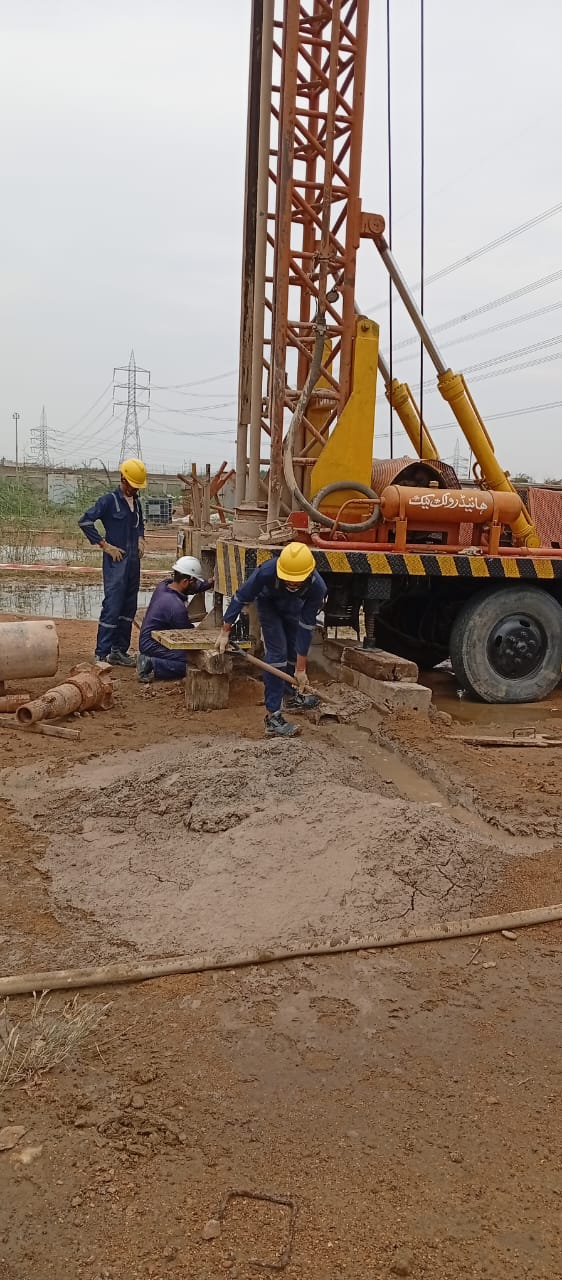
Multi-Story Logistics Hub Soil Investigation
Scope: 4 rotary boreholes drilled to 75 ft with continuous SPT and undisturbed Shelby tube sampling
Engineering Result: Mapped marine clay horizons, established allowable bearing capacity (qall), and recommended bored pile depths to eliminate differential settlement risks.
Frequently Asked Questions About Soil Investigation
Essential guidance for architects, civil contractors, and property owners planning foundation works:
Soil investigation determines the subsurface strata profile, groundwater table elevation, and safe allowable bearing capacity of the ground. Skipping geotechnical testing can lead to catastrophic differential settlement, structural cracking, or foundation failure under seismic load. Furthermore, municipal building authorities (such as SBCA in Karachi and LDA in Lahore) mandate certified soil reports before approving architectural and structural drawings.
The Standard Penetration Test (ASTM D1586) involves driving a standard split-barrel sampler into the bottom of a borehole using a 63.5 kg (140 lb) hammer falling freely through 760 mm (30 inches). The blow counts for three consecutive 150 mm (6 inch) increments are recorded. The sum of the blows for the final two increments represents the N-value, which correlates directly to relative density, internal friction angle, and bearing capacity.
The required number and depth of boreholes depend on building footprint area, structural height, and column loadings as outlined in ASTM and building code guidelines. For standard residential plots (500 to 1,000 square yards), two to three boreholes drilled to 30-50 feet are typically sufficient. For multi-story commercial plazas, industrial plants, or bridges, a systematic grid of boreholes drilled 60 to 120+ feet is executed.
Recovered disturbed and undisturbed Shelby tube samples undergo a comprehensive laboratory testing battery: Sieve Analysis and Hydrometer (particle gradation), Atterberg Limits (Liquid Limit, Plastic Limit, Plasticity Index), Direct Shear and Unconfined Compression (shear strength parameters c and phi), Consolidation testing (settlement characteristics), and Chemical Analysis for sulphates, chlorides, and pH to determine cement type requirements.
When upper soil layers demonstrate adequate bearing capacity (e.g., above 1.5 to 2.5 tons/sq.ft) and low compressibility, shallow foundations (isolated spread footings, strip footings, or mat/raft slabs) are economical. If the upper strata consist of loose fill, marine clays, or soft compressible silt, loads must be transferred to deeper, competent bedrock or dense gravel strata using bored cast-in-place concrete piles.
Field drilling and SPT testing typically require 1 to 3 days depending on borehole count and depth. Laboratory testing and engineering calculations require an additional 5 to 7 working days, culminating in a PEC-registered geotechnical engineer report.