
Engineered Borehole Drilling Solutions
Access to independent, reliable groundwater is vital for industrial manufacturing plants, commercial complexes, agricultural farms, and residential communities facing municipal water shortages. Karachi Tubewell & Pumps specializes in turn-key deep tube well construction designed to maximize aquifer yield while protecting the borehole against collapse, silt infiltration, and premature casing failure.
Our engineering methodology integrates initial geophysical aquifer detection via Electrical Resistivity Surveys with targeted rotary, down-the-hole (DTH) hammer, or reverse circulation drilling methods. Each well profile is custom-engineered based on the local geological formation, static water level, and expected daily water extraction rate.
What Is Included in KTP Deep Borehole Services
When you commission a deep tube well project with KTP, every phase is handled by experienced drilling crews using heavy-duty equipment. Our full-scope service includes:
Standard Project Deliverables
- Pre-drilling site evaluation: Assessment of rig accessibility, overhead utility clearances, and drilling mud circulation setup.
- Pilot hole drilling & lithological logging: Continuous extraction and classification of subsurface strata samples to identify water-bearing strata.
- Borehole reaming & caliper verification: Enlarging the bore to the required diameter (up to 24 inches) to maintain a minimum 2 to 3-inch annular space for gravel packing.
- Casing pipe string assembly: Lowering high-tensile UPVC, mild steel, or stainless steel blind pipes and precision-slotted screen sections.
- Graded pea gravel packing: Installation of washed, silica-based gravel pack to form a natural filtering barrier around screen sections.
- High-pressure well development: Comprehensive air-compressor surging and flushing to purge drilling mud and optimize specific capacity.
- Discharge yield testing: Step-drawdown pumping test to verify sustainable flow rate in gallons per hour and establish Total Dynamic Head (TDH).
- Final completion handover report: Full borehole lithology log, casing assembly diagram, static water level, and water yield certification.
Step-by-Step Borehole Execution Process
We execute borehole drilling with strict adherence to safety standards and hydrological best practices to ensure longevity and prevent cross-contamination between saline and freshwater aquifers.
Geophysical Survey & Site Assessment
We analyze site logistics and review hydrogeological data or perform an ERS survey to pinpoint the optimal drilling coordinate and depth target.
Rig Mobilization & Spudding
Our heavy rotary or percussion rig is leveled on site. Pits for drilling mud circulation and containment are established before spudding the bore.
Drilling & Strata Sampling
Drilling proceeds with high-grade tricone roller bits or pneumatic DTH hammers. Rock cuttings are logged every 10 to 20 feet to map permeable sand and gravel layers.
Casing & Gravel Installation
Screen and blind casing strings are lowered centrally into the hole. Graded gravel pack is fed into the annular space to prevent aquifer collapse.
Air Surging & Yield Testing
The well is vigorously surged with an industrial air compressor until discharge water runs crystal clear and sand-free, ready for pump integration.
Technical Specifications & Project Ranges
The table below provides general technical guidelines for deep tube well bores across different application scales. Exact figures depend upon local lithology and required discharge volumes.
| Application Scale | Bore Diameter | Casing Pipe Material | Typical Depth Range | Estimated Timeline |
|---|---|---|---|---|
| Residential / Domestic | 5 inch to 8 inch | Class D / Class E UPVC | 150 ft to 450 ft | 2 - 4 Days |
| Commercial / Institutional | 8 inch to 12 inch | Heavy Duty UPVC / MS | 300 ft to 750 ft | 4 - 7 Days |
| Industrial Manufacturing | 12 inch to 18 inch | Mild Steel / Stainless Steel | 400 ft to 1,500+ ft | 7 - 14 Days |
| Agricultural Irrigation | 10 inch to 16 inch | UPVC / MS Slotted Screen | 250 ft to 800 ft | 5 - 10 Days |
Cost Factors & Budget Considerations
The total investment for a deep tube well depends on several technical parameters rather than a single fixed rate. Primary variables affecting total cost include:
Drilling in soft coastal alluvium is faster than penetrating consolidated sandstone or hard limestone boulders.
Large-diameter heavy steel or stainless steel screens incur higher material investment than standard UPVC pipes.
Operating heavy rigs beyond 500 feet requires specialized drilling mud chemicals, heavy drill collars, and higher rig time.
Extended high-pressure air-surging ensures 100 percent sand-free water and protects pumps from impeller abrasion.
Recent Drilling Project Profile
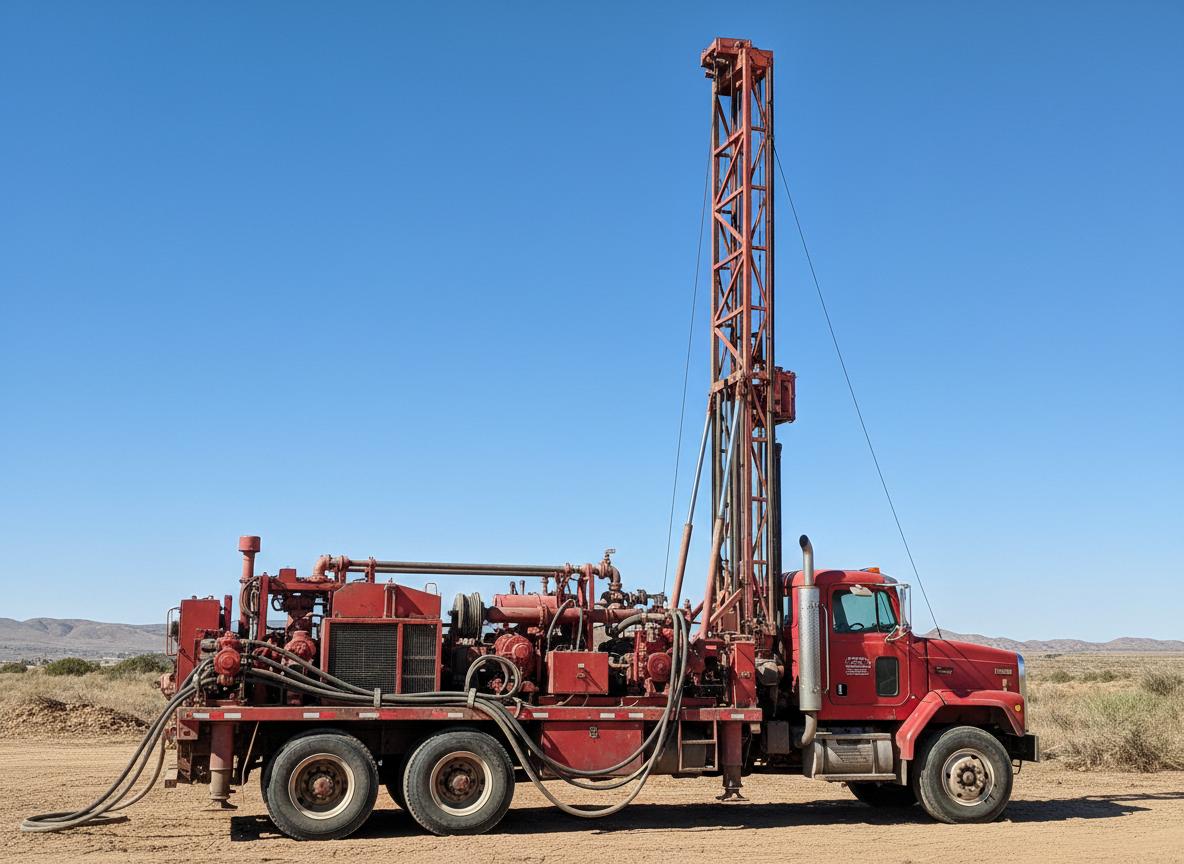
Industrial Water Supply Bore
Location: Karachi Industrial Area, Sindh
Drilled Depth: 850 Feet Deep Bore
Casing Assembly: 10-inch diameter with precision stainless steel screens
Outcome: High-yield sand-free water supply integrated directly with plant filtration.


